
Philosophie

  • The „All-Crusher“ Myth and the Grand Illusion of Immanuel Kant

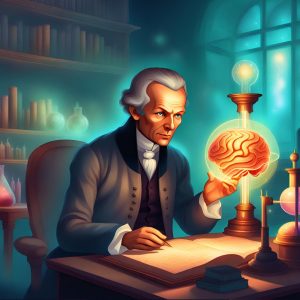
    Deconstructing the Mandarin of Königsberg #9 Over the past eight weeks, we have undertaken an uncompromising, evidence-based expedition through the intellectual fortress of Immanuel Kant. We dismantled the myth of the scientific genius, exposing his physical and cosmological errors. We revealed that his „awakening from dogmatic slumber“ was a strategic retreat to protect Lutheran morality from empirical skepticism. We showed how his „Copernican Revolution“ was, in fact, a solipsistic Ptolemaic relapse that trapped human cognition inside its own subjective simulation. We put the Categorical Imperative on trial, uncovering its anti-empathetic, authoritarian nature, and exposed the theological „God-Bias“ that…
  • Remembering Mario Bunge: The Public Intellectual Who Tackled Big Questions

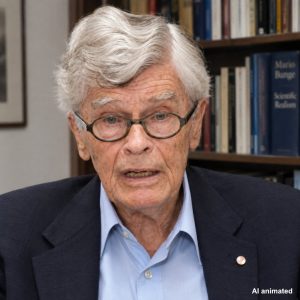
    Remembering Mario Bunge: The Public Intellectual Who Tackled Big Questions By Heinz W. DrostePublished on September 21, 2026 On September 21, the international scientific and philosophical community marks the birthday of Mario Augusto Bunge (September 21, 1919 – February 24, 2020). On the occasion of his 100th birthday, I had the privilege of contributing a chapter entitled „Mario Bunge as a Public Intellectual“ to his centenary festschrift, Mario Bunge: A Centenary Festschrift (edited by Michael R. Matthews and published by Springer). Today, as we reflect on his legacy, Bunge’s uncompromising defense of rationalism, scientific realism, and social responsibility…

  • A New Compass for the 21st Century—Moving Beyond the Dictatorship of Reason

    Deconstructing the Mandarin of Königsberg #8 Over the past seven weeks, we have embarked on a rigorous, evidence-based expedition through the formidable intellectual fortress of Immanuel Kant. We have systematically dismantled the myths that have insulated his legacy from modern scientific and moral scrutiny. We exposed his cosmological models as mathematically flawed. We revealed that his „awakening from dogmatic slumber“ was not a leap toward empirical science, but a strategic retreat to protect Lutheran theology from skepticism. We demonstrated how his „Copernican Revolution“ was actually a solipsistic, Ptolemaic relapse that trapped human cognition inside its own subjective simulation….

  • Kant’s Authoritarian State

    Deconstructing the Mandarin of Königsberg # 7 Over the past six weeks, we have systematically dismantled the intellectual fortress of Immanuel Kant. We have exposed his physical and cosmological errors, stripped away the solipsistic illusion of his transcendental idealism, and revealed the rigid, anti-empirical nature of his duty-bound ethics. We have even uncovered the dark theological trap that led the „Giant of the Enlightenment“ to formulate an explicit hierarchy of intellectual racism. Now, as we approach the conclusion of this series, we must confront the ultimate socio-political fallout of his system: if Kant’s epistemology isolates us from reality…

  • The Theological Trap and the Intellectual Racism of Pure Reason

    Deconstructing the Mandarin of Königsberg, Part 6 For generations, Immanuel Kant has been celebrated as the supreme secular champion of the European Enlightenment. Traditional academic narratives insist that his ethical system is based entirely on pure, objective reason, accessible to any rational being regardless of their religious faith. However, a rigorous textual analysis of Kant’s later writings reveals a profoundly different reality. Kant’s moral framework is deeply entangled in a „God-Bias“—a theological trap that not only compromised his epistemology but ultimately led him to construct a pseudoscientific, racist hierarchy of humanity. The Illusion of Secular Ethics and the…

  • The Categorical Imperative on Trial

    Why Kantian Duty Ethics Collapses in the Face of Moral Psychology and Modern Democracy For more than two centuries, the Categorical Imperative has occupied the throne of Western moral philosophy. Taught in schools, quoted in constitutional court rulings, and invoked in countless Sunday speeches, it is celebrated as the ultimate rational formula for universal justice: „Act only according to that maxim whereby you can at the same time will that it should become a universal law.“ (Groundwork of the Metaphysics of Morals, 1785) The appeal of this formula seems obvious. It promises an objective, disembodied standard of right…

  • The Copernican Revolution Fallacy

    The Ptolemaic Relapse: Why Kant’s „Copernican Revolution“ Is an Epistemological Illusion (and the 18th-Century Matrix) In the Preface to the second edition of the Critique of Pure Reason (1787), Immanuel Kant introduced what is celebrated as the most audacious intellectual maneuver in Western philosophy: „Up to now it has been assumed that all our cognition must conform to the objects […]. Let us once try whether we do not get farther with the problems of metaphysics by assuming that the objects must conform to our cognition.“ (CPR, B XVI) To make this radical inversion palatable, Kant famously compared…

  • The Dogmatic Slumber Fallacy: Why David Hume Woke Immanuel Kant to Save Faith and Duty, Not Empirical Science

    In the annals of Western philosophical history, few anecdotes are quoted with such reverent regularity as Immanuel Kant’s dramatic awakening from his „dogmatic slumber.“ In the preface to his Prolegomena to Any Future Metaphysics (1783), Kant famously made his monumental confession: „I freely admit that the suggestion of David Hume was the very thing which many years ago first interrupted my dogmatic slumber and gave my investigations in the field of speculative philosophy a quite new direction.“ For over two centuries, university curricula and hagiographic biographies have presented this awakening as a heroic turning point in modern intellectual…

  • The Cognitive Prosthesis: Why We Turn Immanuel Kant into an Intellectual Crutch

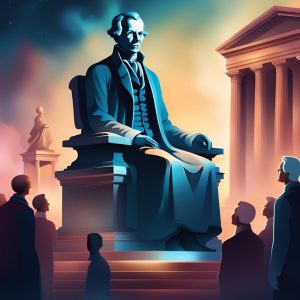
    For over two centuries, Western intellectual culture has revered Immanuel Kant as the ultimate lighthouse of the Enlightenment, the undisputed architect of modern reason, and the intellectual father of human autonomy. In academic lecture halls, philosophical treatises, and public commemorations, we are repeatedly taught to recite his three cardinal questions as if they were holy scripture: What can I know? What ought I to do? What may I hope? To the modern educated reader, these three questions sound like a noble, liberating blueprint for human self-determination. But if we dismantle this hagiography through the lens of modern cognitive…

  • Kants kategorischer Imperativ auf dem Prüfstand

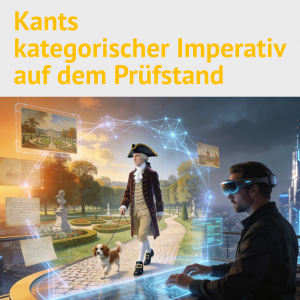
    Kants kategorischer Imperativ auf dem Prüfstand Ein philosophischer Streifzug durch 200 Jahre moralischer Selbstüberschätzung Stellen wir uns vor, Sie sitzen beim nächsten Familienfest und jemand fragt in die Runde: „Wer kennt eigentlich Kants kategorischen Imperativ?“ Mindestens drei Hände gehen hoch. Auf Nachfrage wird dann irgendwas genuschelt von „Handle so, dass…“ – und dann bricht die Antwort ab wie eine Straßenbahn, die plötzlich keine Schienen mehr hat. Genau da beginnt das Problem. Denn Kant ist ein Mythos, der sich im kollektiven Bildungsbewusstsein so tief eingenistet hat wie kein anderer Philosoph der westlichen Tradition. Höchste Zeit, diesen Mythos einmal gründlich…